
Overview
The Human-Machine Interaction and User-Centered Design area investigates the fundamental relationship between humans and technology, with the goal of creating systems that are not only effective, but also intuitive, adaptive, and meaningful.
In an era where digital systems are increasingly pervasive, understanding how users perceive, interpret, and respond to technology becomes essential. This research area places human experience at the center, exploring cognitive processes, emotional responses, and behavioral dynamics to inform the design of next-generation interfaces and interaction paradigms.
Approach and Technologies
The research combines experimental methodologies with computational models to capture and interpret human states. Techniques such as Facial Expression Recognition, EEG and physiological signal analysis are used to study attention, engagement, and emotional responses, while machine learning models translate these signals into actionable insights.
These insights are then applied to the design of immersive and adaptive systems, particularly within virtual, augmented, and mixed reality environments. The goal is to create interfaces that can dynamically respond to the user, adjusting content, interaction modalities, and feedback based on real-time data.
At the same time, the area explores broader questions related to ergonomics, usability, and human factors, ensuring that technological systems align with human capabilities and limitations.
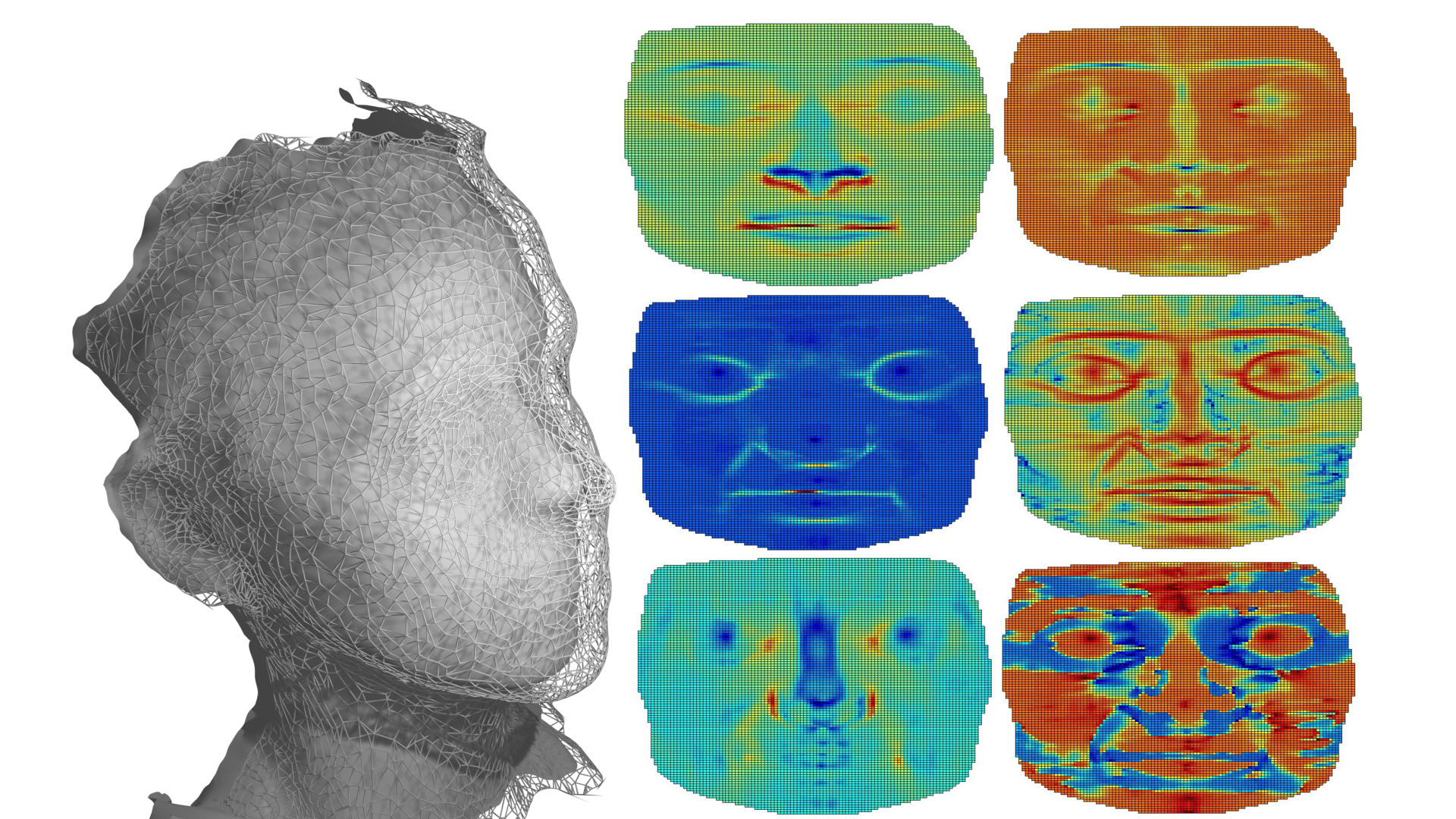
Face analysis – Geometrical descriptors
Applications and Impact
Applications include virtual environments, cultural heritage experiences, training and education platforms, and industrial interfaces. Across these domains, the focus is on enhancing engagement, improving usability, and enabling more natural forms of interaction.
The impact extends beyond usability: by aligning technology with human needs, this area contributes to safer systems, more effective learning experiences, and a deeper integration of digital technologies into everyday life.